
INTRODUCTION
The Freedom Suits Memorial has been the dream of the Honorable David C. Mason since before 2010. He campaigned with tireless devotion to make the dream a reality. In 2014, with the full support of his brothers and sisters on the bench of the Twenty Second Judicial Circuit, he convened the Freedom Suits Memorial Steering Committee. After many proposals for a memorial sculpture were submitted, the Steering Committee unanimously chose nationally renowned artist Preston Jackson’s powerful offering of what became a 14-foot-tall bronze sculpture with a dynamic, visual narrative. With several hundred people in attendance, the Memorial was unveiled on June 20, 2022, the first celebration of Juneteenth as a national holiday.
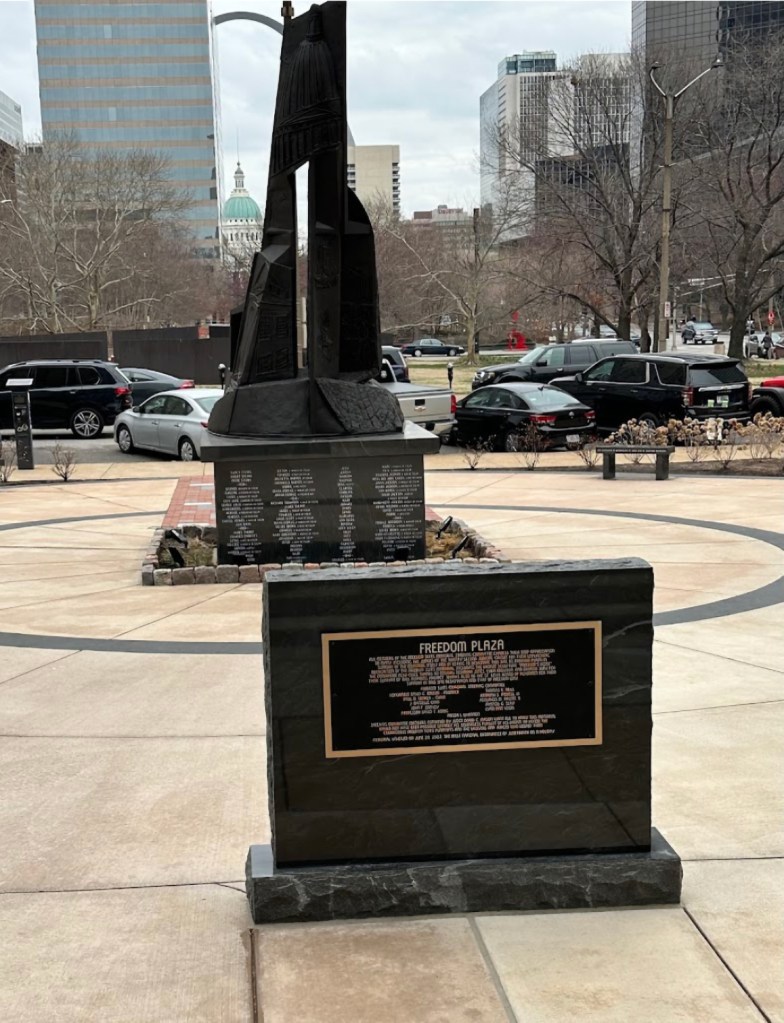
Freedom Plaza, home of the Freedom Suits Memorial, has numerous other elements and is located on the Eleventh Street side of the Clyde S. Cahill, Jr., Court Building. In early 2025, that short section of Eleventh Street has now been officially renamed “Freedom Way”. One can see the Old Courthouse and the Arch from there. Freedom Circle, designed in 2012 by respected landscape architect, Randall W. Mardis at the request of Judge Mason, is a 60-foot-diameter, paved surface, with granite benches set at the perimeter. At its center is the 14-foot-tall bronze sculpture “Freedom’s Home,” sitting atop an imposing black granite base, bordered with historic St. Louis riverfront levee cobblestones. The Walk of Freedom, Judge Mason’s concept, is a 30-foot-long by 12-foot-wide walkway from Eleventh Street (now “Freedom Way”), where donors could show their support for the Memorial with names and tributes on red bricks and larger granite pavers.
What follows is something similar to what a personal guide accompanying a visitor might offer by way of comments on each element of the Memorial. Our Foundation board members all hope you find the information helpful and that it will encourage you to visit the Memorial to experience in person its powerful and poignant images and messages honoring the courage of these brave freedom suits plaintiffs and the lawyers and judges who helped them.
Paul N. Venker
President
Freedom Suits Memorial Foundation – September 2023 (updated October 2025)
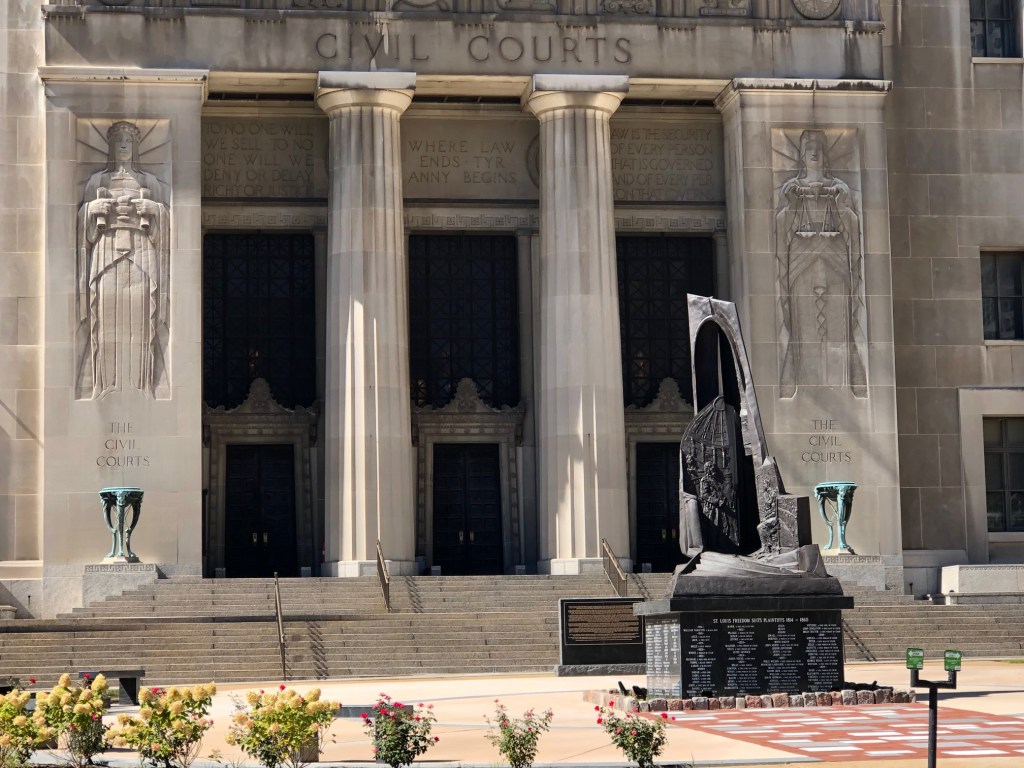
A Masterpiece Bronze Sculpture – “Freedom’s Home”
The centerpiece of the Memorial is a powerful bronze sculpture – Freedom’s Home. Like many well-known sculptors, Preston Jackson, submitted a set of sketches in response to a Request for Proposal of the Freedom Suits Memorial Steering Committee in late 2015. Preston Jackson is a nationally renowned artist whose civil rights bronzes include the sobering and striking Acts of Intolerance, situated on the grounds of the Lincoln Presidential Library and Museum in Springfield, Illinois. Jackson’s presentation for the Freedom Suits Memorial project, both in person and with his renderings were head and shoulders above the other submissions. Not only did Preston bring his full set of skills as a sculptor, but he also put his whole heart into this project to share with us a complex and sobering vision of one of the most challenging times in American history.
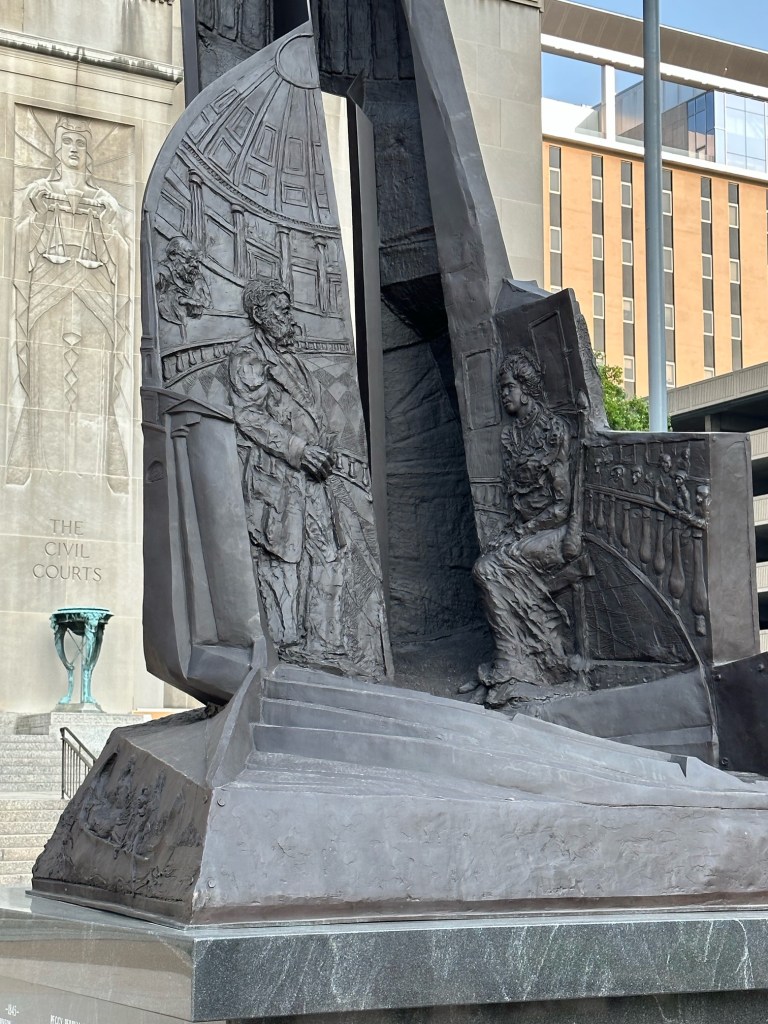
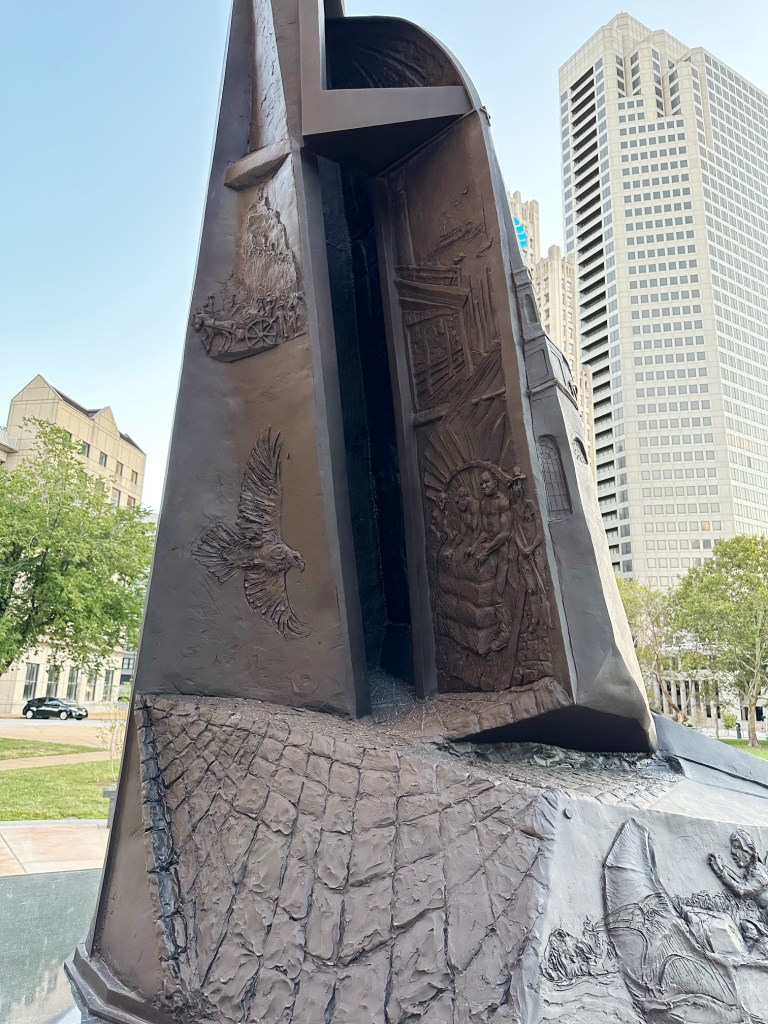
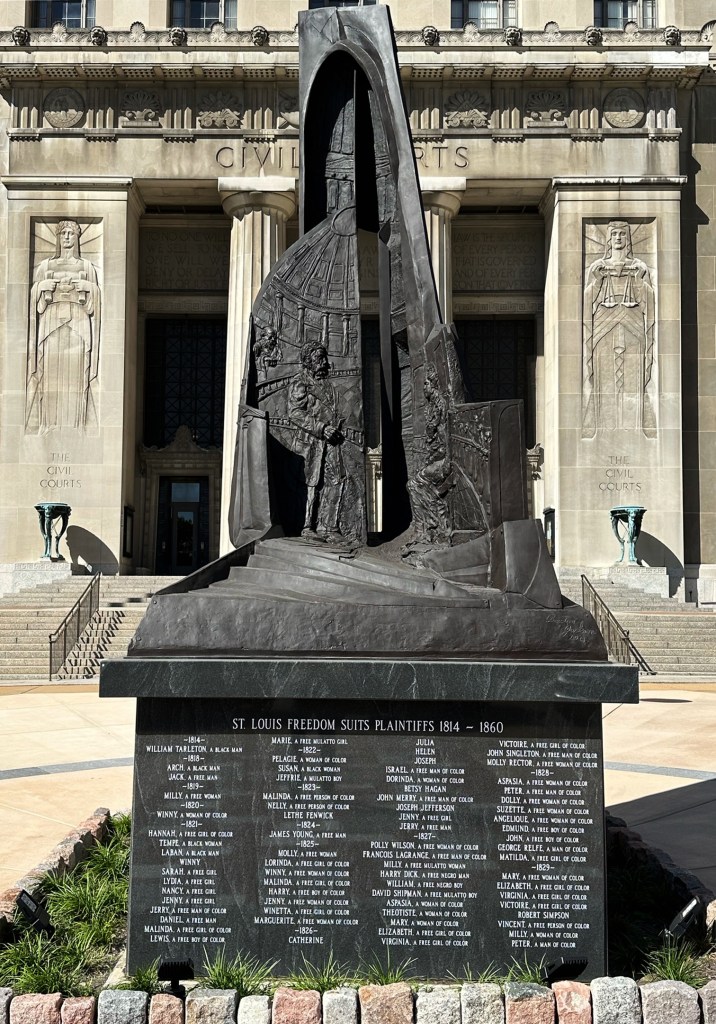
This 14-foot-tall bronze statue presents a dynamic, visual narrative using scenes inside and outside of the Old Courthouse to paint a picture of the world within which the St. Louis freedom suits occurred. Two of the scenes are worth elaborating upon here. The main scene depicts a freedom suit trial. As a gesture of respect, Preston Jackson has portrayed the plaintiff as a woman, most likely a mother. She is there because most freedom suits plaintiffs were women, and their freedom could also make their children free because enslaved status descended through the mother. On the south elevation of the statue, there is a riverfront scene showing enslaved workers on the levee with a steamboat’s tall smokestacks in the background. There is a powerful contrast between the foreground – lowly workers providing the indispensable labor for commerce on the riverfront – and the backdrop – the steamboat which epitomized one of the highest forms of luxury travel of the day. Black levee workers would never be expected to be cabin passengers on that, or any other, steamboat.
There are many more than just these two scenes in the moving, visual narrative of the sculpture. Visitors can see all that the sculpture has to offer when they visit Freedom Plaza.
Plaintiffs’ Names on the Memorial Base
The array of 326 names on the Memorial base is the product of a combination of painstaking, scholarly research coupled with a humanistic approach which aspires to insure that Freedom Plaza visitors connect with these courageous Americans. Members of the Freedom Suits Memorial Steering Committee discussed whether to simply list the plaintiffs’ names or to do more. The full complement of names took the concerted effort of nationally recognized freedom suits scholars: Professor Emeritus David Konig, former Missouri State Archivist, Kenneth Winn, and Prof. Anne Twitty.
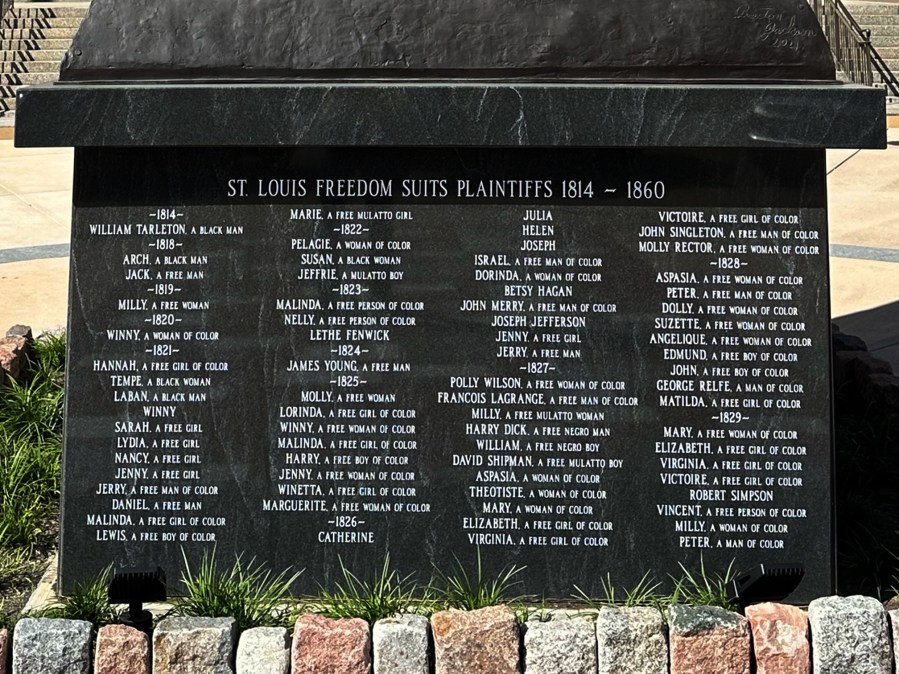
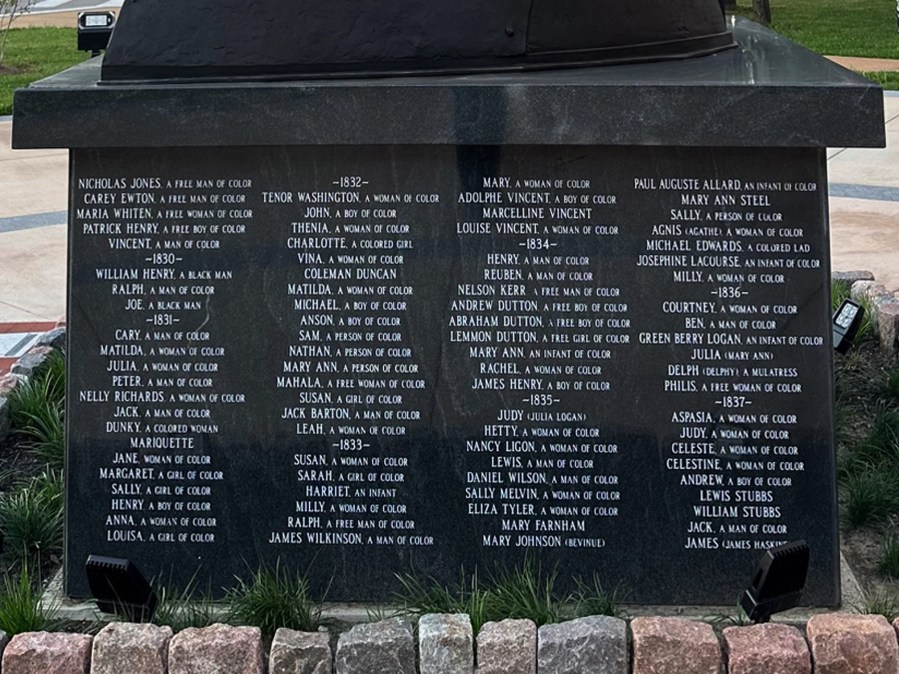
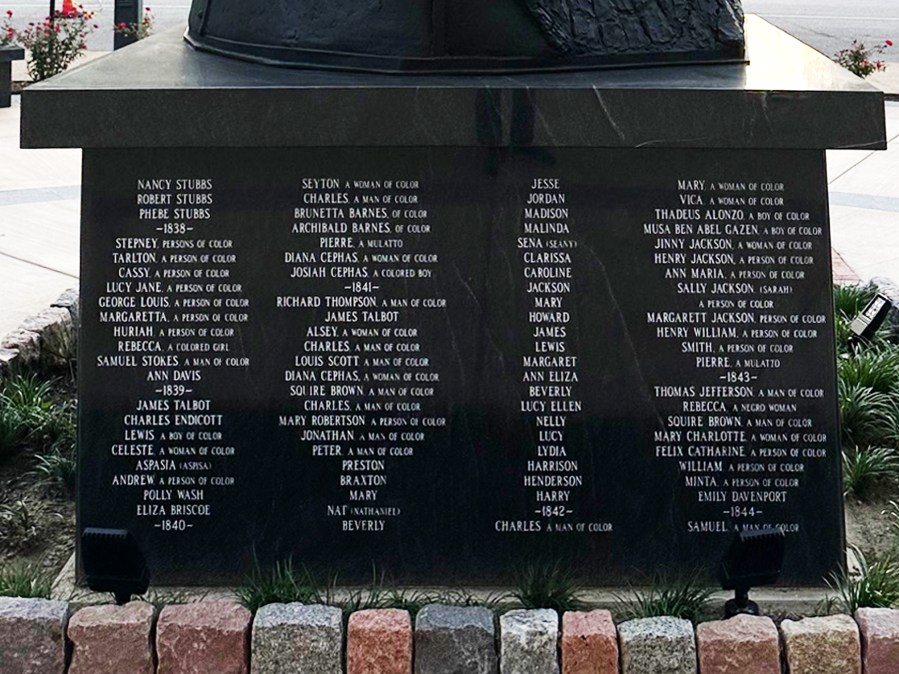
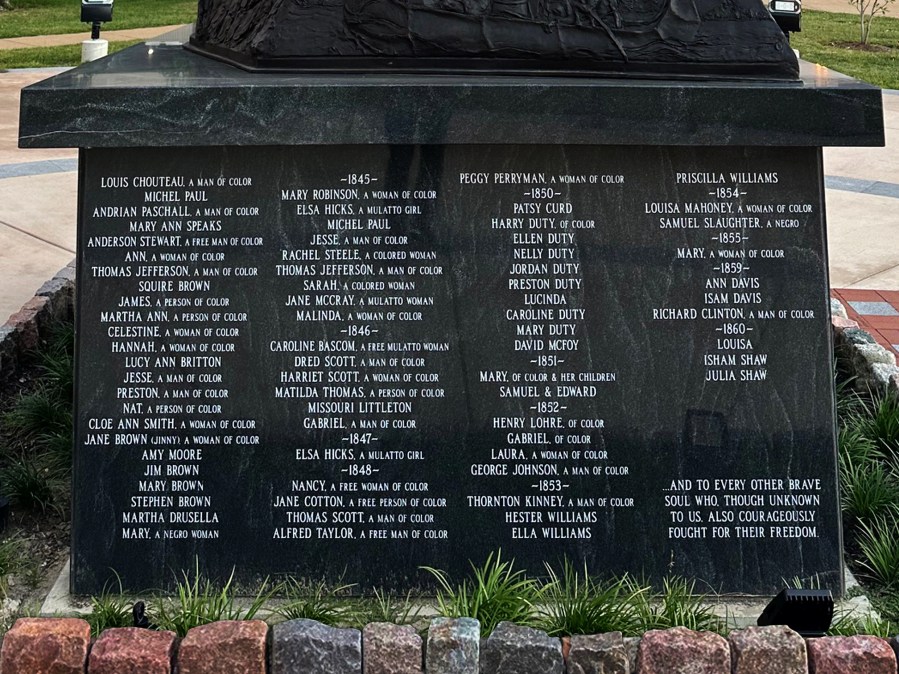
The plaintiffs’ names appear exactly as they did on the petitions they filed, including descriptive phrases behind their names, when they were present. Some of these phrases actually use the word “free,” which must have been strategic. That is, by using that word in describing plaintiffs, there was an attempt to assert as fact the very question the court would be deciding in a freedom suit. Many plaintiffs also have last names (surnames), which were sometimes the same as those of their enslaver, but in other instances differed.
Careful study of this list of plaintiffs’ names reveals that most were women, some of whom filed suit alongside their children. Under the law at the time, enslaved status descended through the mother, and if a woman had been entitled to her freedom before her children were born, they too would be entitled to their freedom.
Finally, by surveying all four sides of the Memorial’s base, one can see how the number of suits varied over time. Most freedom suits were filed annually between 1824 and 1852. Freedom suits scholars call this the “Golden Age” of St. Louis (and Missouri) freedom suits, which began with the Missouri Supreme Court’s decision in Winny v. Whitesides. There, the Missouri Supreme Court adopted the “once free, always free” legal doctrine, which held that enslaved people who were taken to free soil became entitled to their freedom and could not legally be reenslaved by being removed to a slave state. The number of cases did not drop off until 1852, when the Court abandoned that doctrine in the Dred and Harriet Scott cases. Thereafter, the number of cases filed in the St. Louis Circuit Court dwindled. The last St. Louis freedom suit we know about was filed in 1860, just one year before the start of the Civil War.
St. Louis Riverfront Levee Cobblestones around the Memorial sculpture base
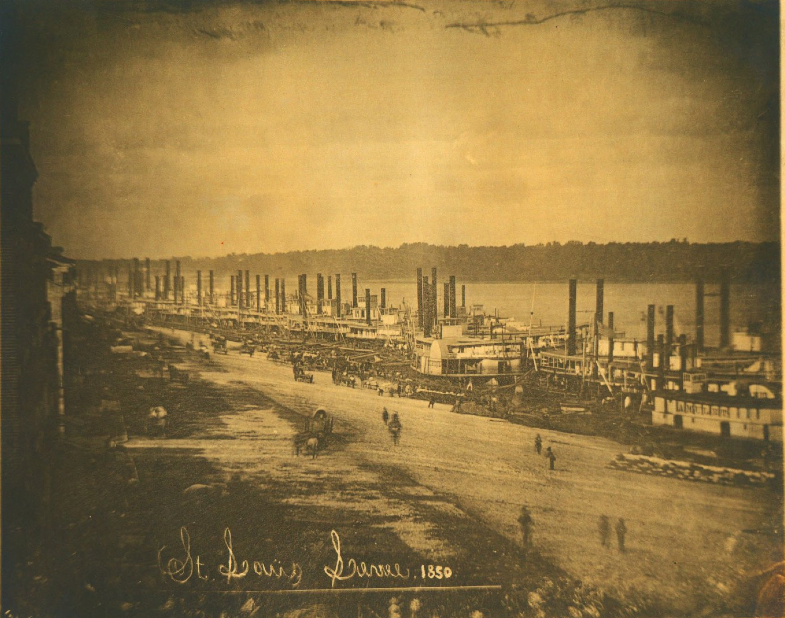
The Freedom Suits Memorial Steering Committee decided, after the suggestion by landscape architect Randy Mardis and Judge Mason, that riverfront levee cobblestones at the base of the Memorial would be a poignant reminder about Blacks’ contribution to St. Louis being an important and successful commercial center. These cobblestones were pulled from those which were known to have been used to pave the St. Louis levee at some point in time. The famous St. Louis levee is a place where many enslaved Blacks unloaded and loaded cotton and other goods on the riverfront. As mentioned above, artist Preston Jackson has included a St. Louis levee/riverfront scene on the south side of Freedom’s Home. There, one can see laborers moving cotton bales on the levee, with towering smokestacks of a paddle wheeler in the background.
Walk of Freedom Leading up to the Focal Point Sculpture – Freedom’s Home
The Freedom Suits Memorial Steering Committee had many discussions as to how to recognize donors on the site. Options included a “headstone” outside of Freedom Circle and a low wall at its western edge. At some point, Judge David Mason suggested a walkway of red bricks and granite pavers from the Eleventh Street sidewalk. He also suggested we call this the “Walk of Freedom.” The Steering Committee agreed that was the best choice.

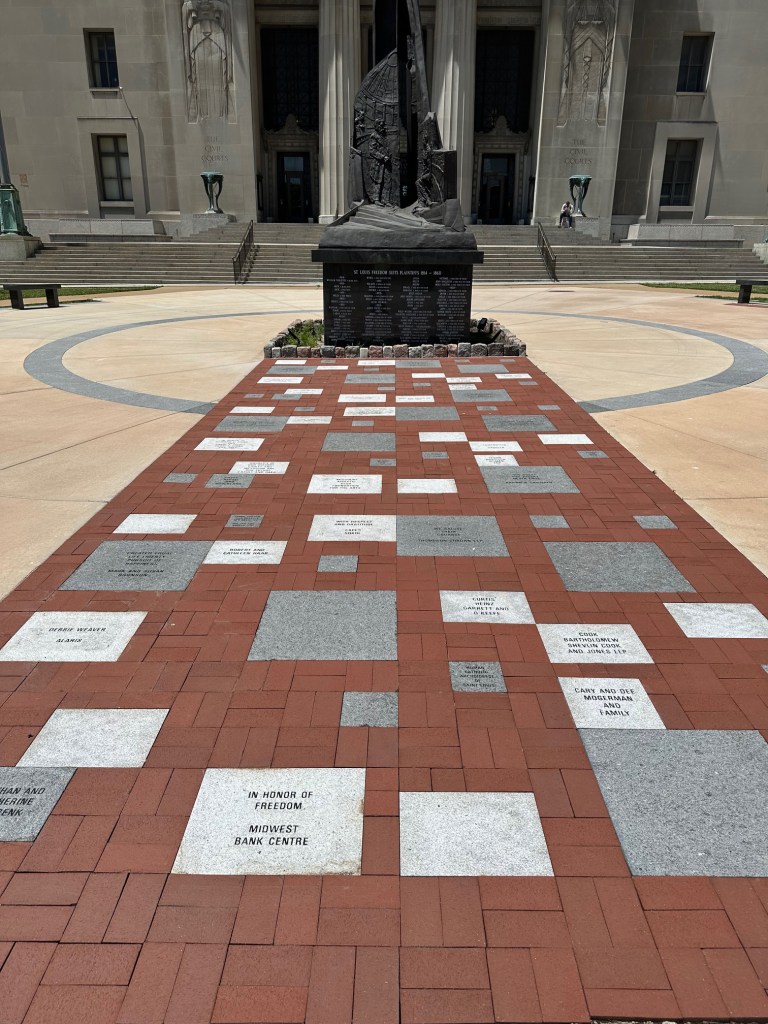
To maintain as much as possible an egalitarian presentation of donors on the Walk, the Steering Committee enlisted highly skilled design architect Karl Grice and his group to conduct a random layout of the granite pavers and the red bricks, which was accomplished using computer software. We wanted to have donations of all amounts represented across the entire Walk of Freedom. The layout of the Walk of Freedom certainly accomplishes this.
Granite benches at perimeter of Freedom Circle
Benches located at the perimeter of the paved circle (now called Freedom Circle) was an original element of Randy Mardis’s design. The Freedom Suits Memorial Steering Committee debated the bench design and decided to go with something simple, but that was also a timeless, classic appearance.
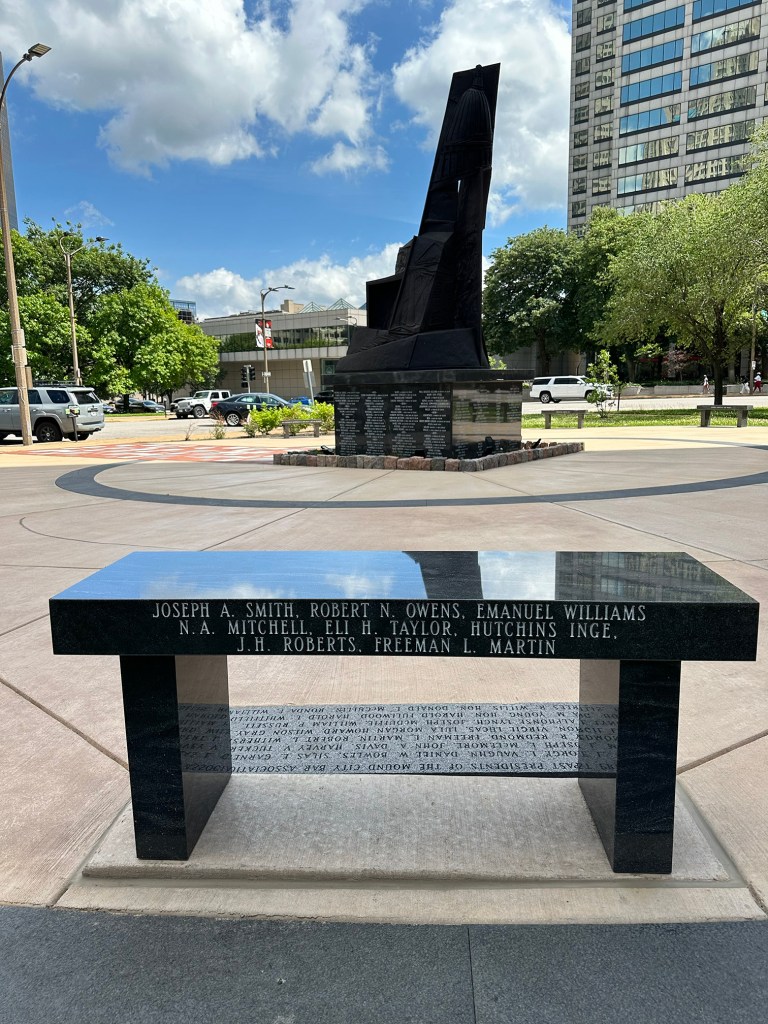
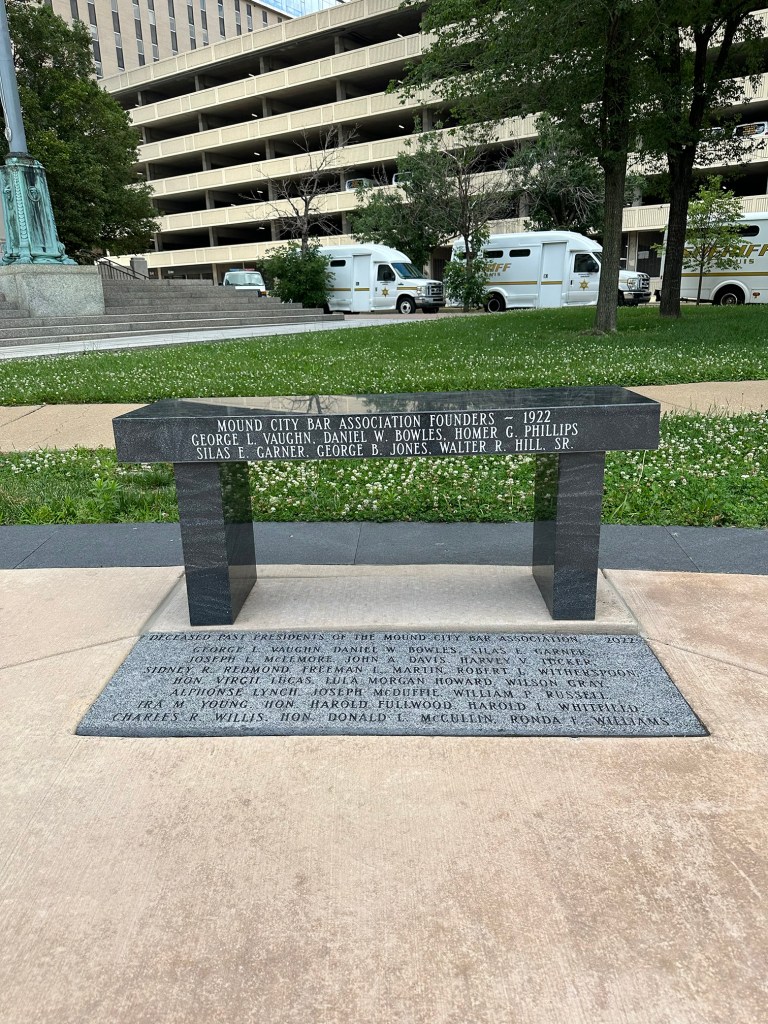
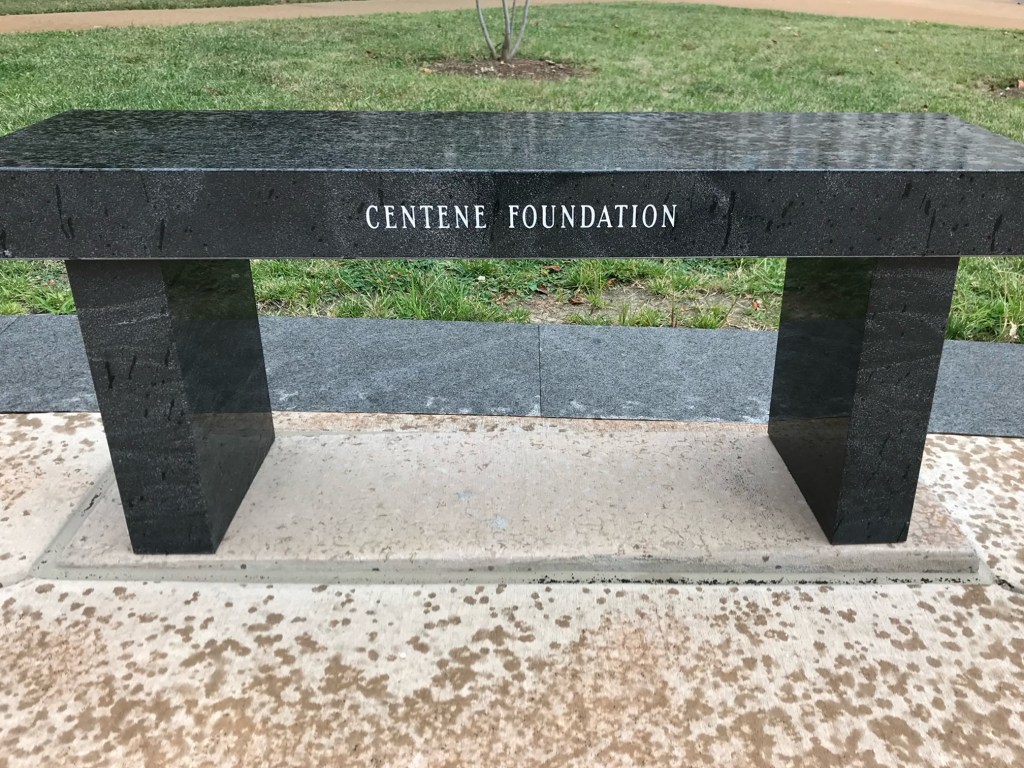
In recognition of the significant role the donors at this level had in the success of the Memorial coming into existence, the 10 benches tie into the Memorial’s imposing black granite base. First, the material and finish of the benches is the same black granite and polished appearance as the Memorial base. Second, the lettering on the benches matches the typeface and point size of the plaintiffs’ names on the Memorial’s granite base. This approach helps expand the visual space of the Memorial base itself, by tying its color, finish, and lettering to the benches.
Dedication Plaque near the Civil Courts Building Steps
Located on the western edge of Freedom Circle and near the courthouse steps is a large, bronze plaque mounted on a huge granite stone.
The Steering Committee discussed whether there should be any written explanation of the Memorial. Some members felt it might be unnecessary, while others felt the importance of the Memorial would reach more visitors if it was accompanied by a statement to provide context for the freedom suits.
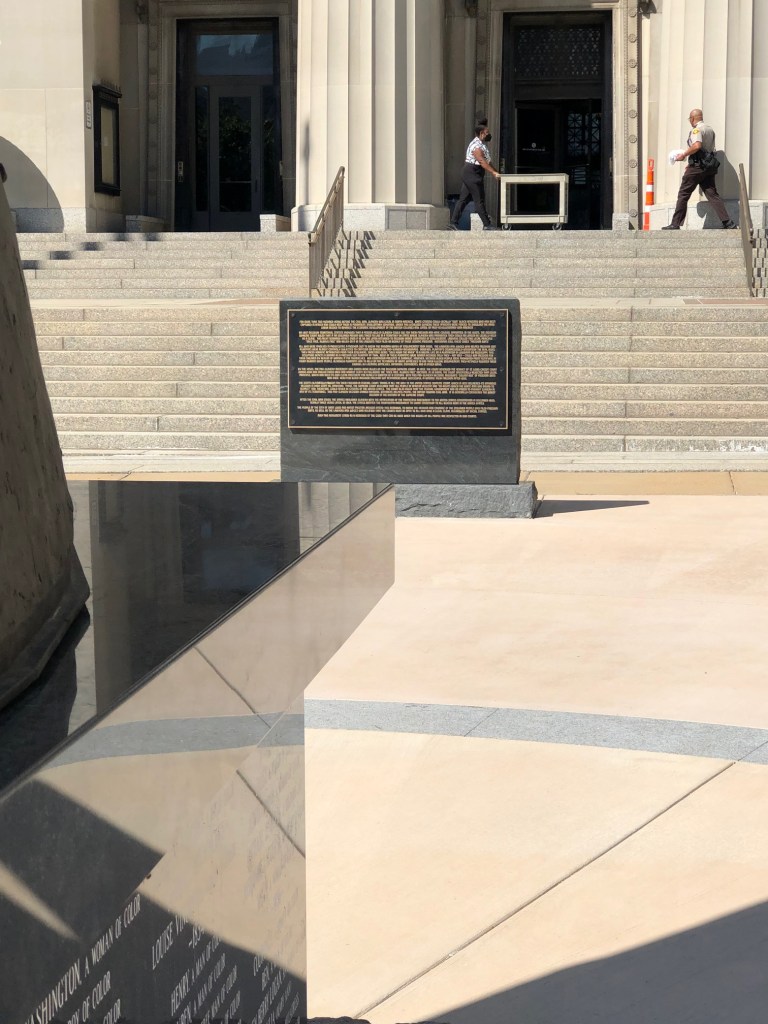
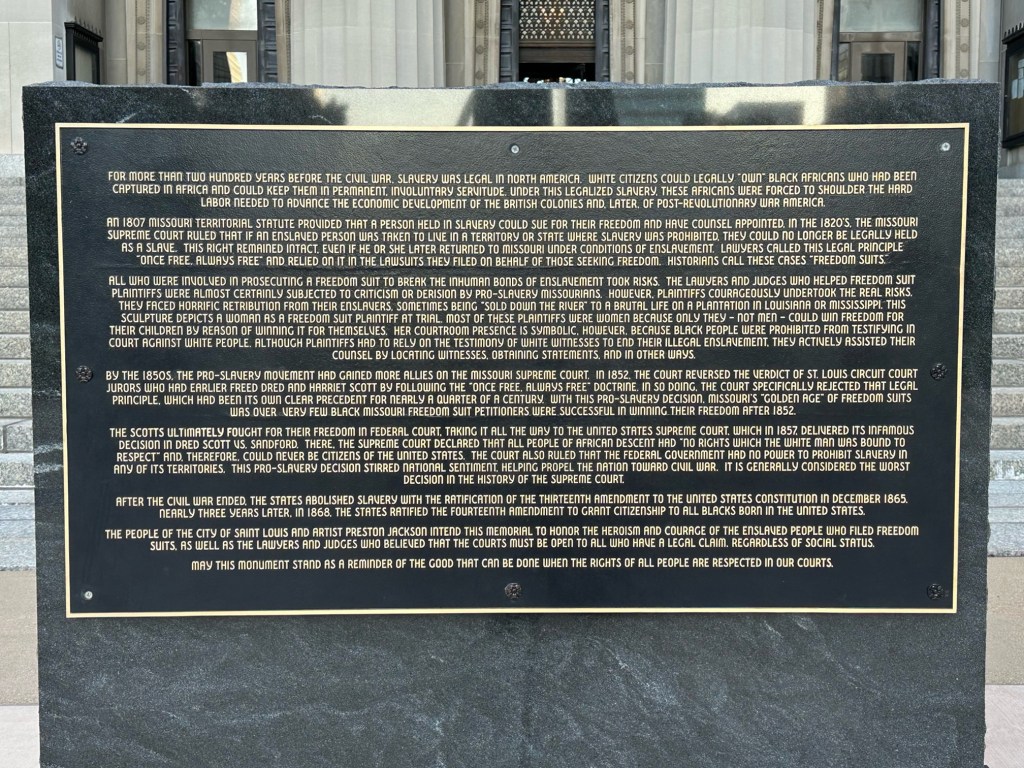
This Dedication Plaque provides a concise overview of the St. Louis freedom suits. All Freedom Suits Memorial Steering Committee members were able to contribute to the statement on the Plaque. However, final responsibility was entrusted to the collaborative efforts of Memorial Founder, Hon. David C. Mason, and esteemed freedom suits scholar, Professor Emeritus David T. Konig. This carefully crafted statement provides visitors with a concise and powerful overview not only of the St. Louis freedom suits, but also of their importance to our national history.
Designation plaque on the Opposite Side of the Dedication Plaque
The Designation Plaque is on the opposite side of the large granite headstone that the Dedication Plaque is on. It faces the courthouse and will easily be seen by those leaving the courthouse through its eastern doors.
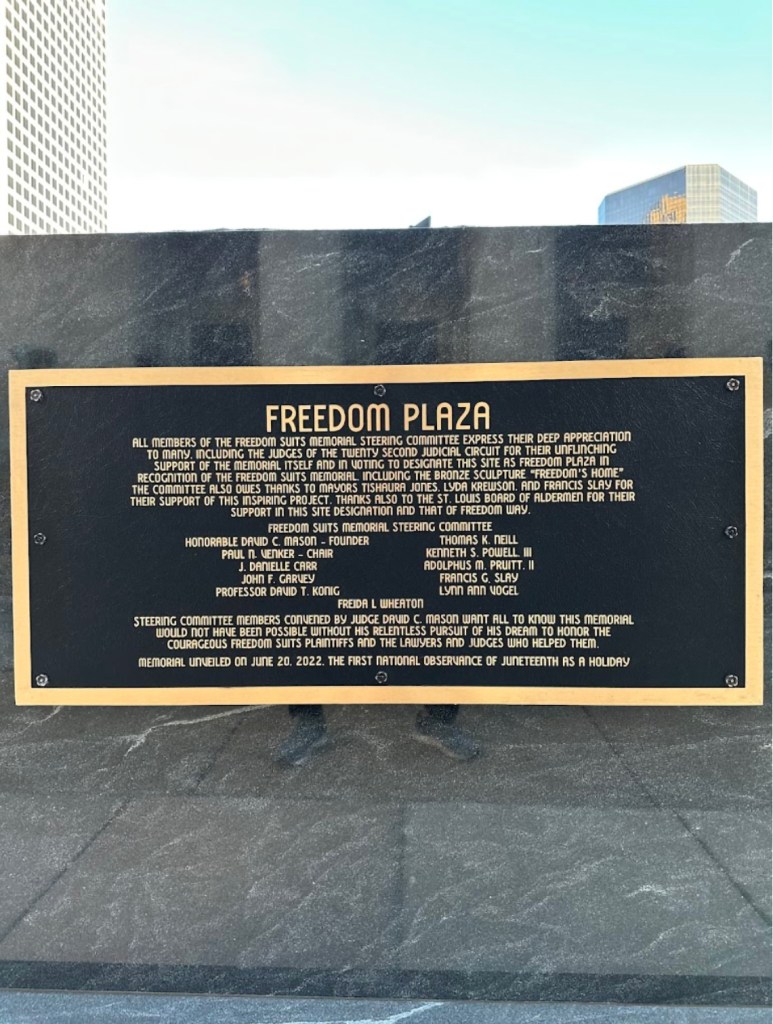
This plaque informs visitors about the naming of the Memorial, Freedom Plaza, and Freedom Way. More importantly, it is a permanent expression of gratitude from the Freedom Suits Memorial Steering Committee to many of those who assisted in making the Memorial a reality. This includes the judges of the Twenty Second Judicial Circuit, who supported Judge Mason’s dream from the beginning. Over a stretch of eight years and three terms, St. Louis Mayors – Francis Slay, Lyda Krewson, and Tishaura Jones, were also very supportive. The St. Louis Board of Alderman also supported the Memorial with the designation of Freedom Plaza and with a portion of Eleventh Street being renamed “Freedom Plaza.”
 FREEDOM SUITS MEMORIAL FOUNDATION