
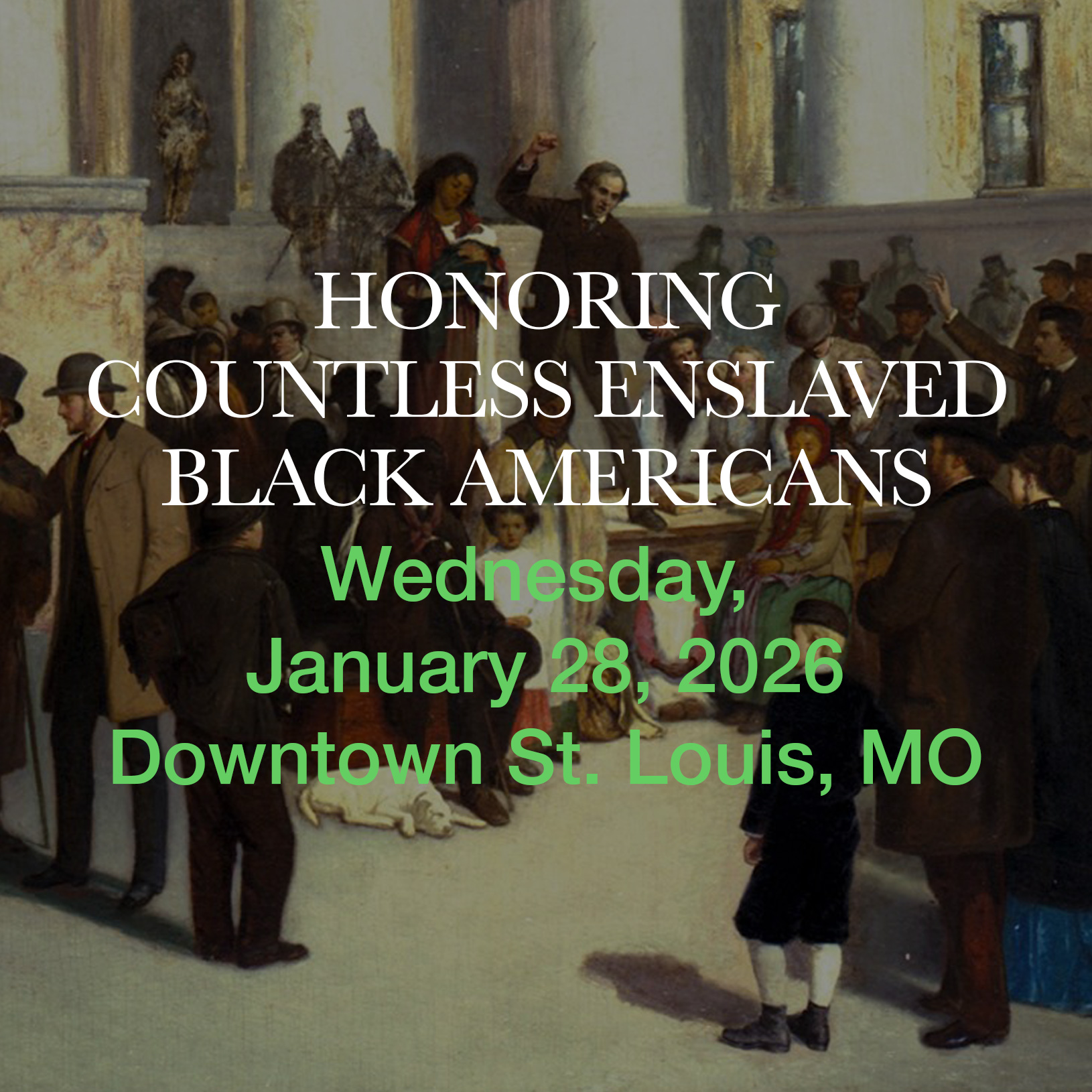
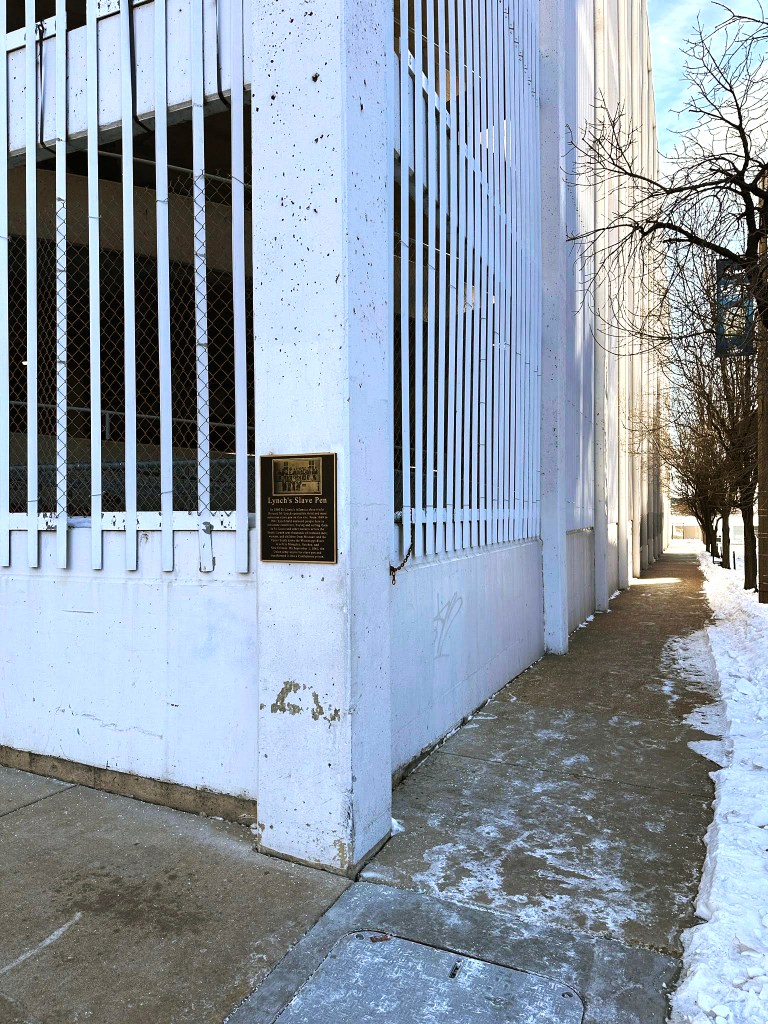
It is almost certain that few people who have walked this earth have been more callous, soulless, or greedy, than the infamous slave trader Bernard Lynch. Just this past Wednesday, January 28, a large group of St. Louis citizens and dignitaries gathered in the freezing weather for the unveiling of a bronze plaque, remembering and honoring the victims Lynch tortured at his slave pens.
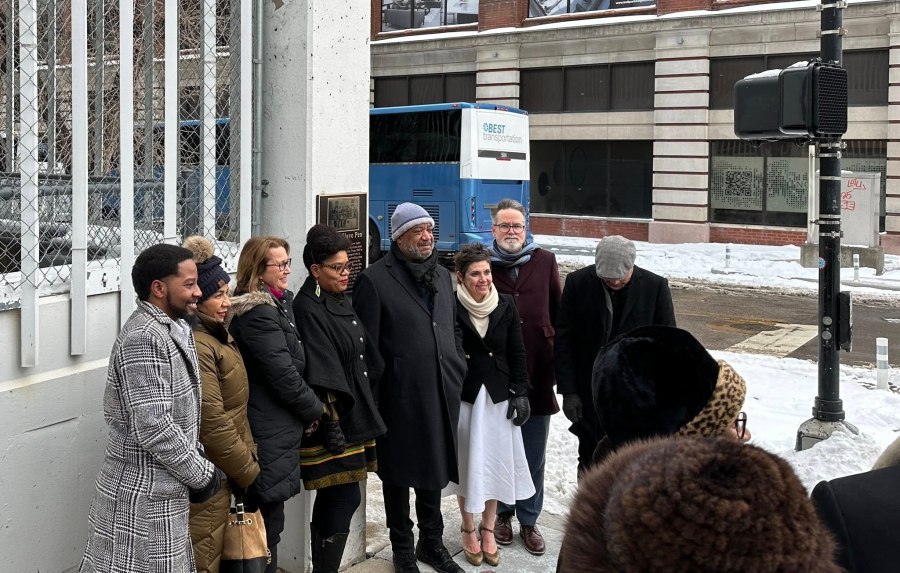
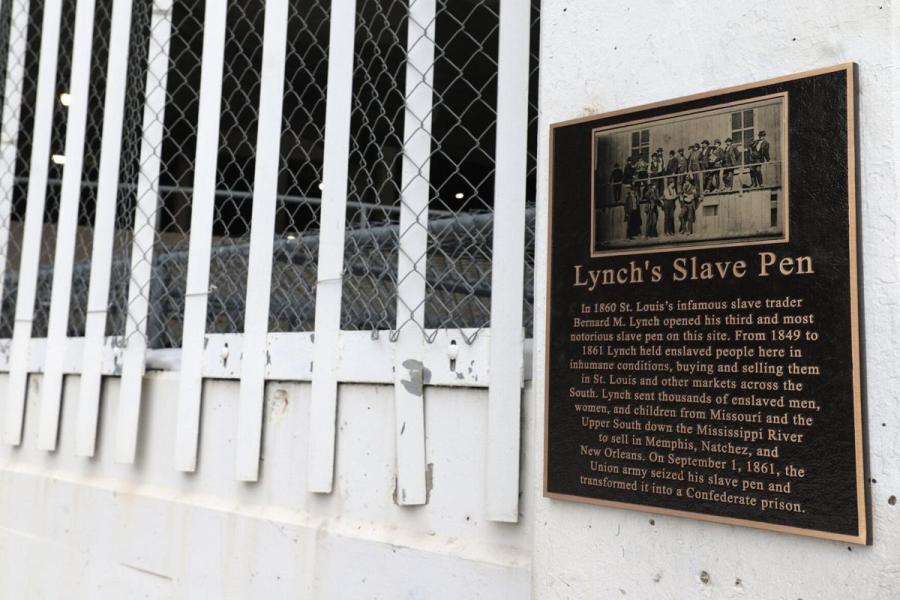
The spark plug over a five-year period for this tribute was former state Missouri State Representative, Trish Gunby, who first learned of the nefarious Lynch and St. Louis’s unfortunate role in the slave trade several years ago. In 2020, she and former Missouri State representative and current St. Louis City Alderman, Rasheen Aldridge, Jr., shared the passion needed to move this forward, leading to the plaque placement on the corner of Broadway in Clark, just across the street from Ballpark Village.
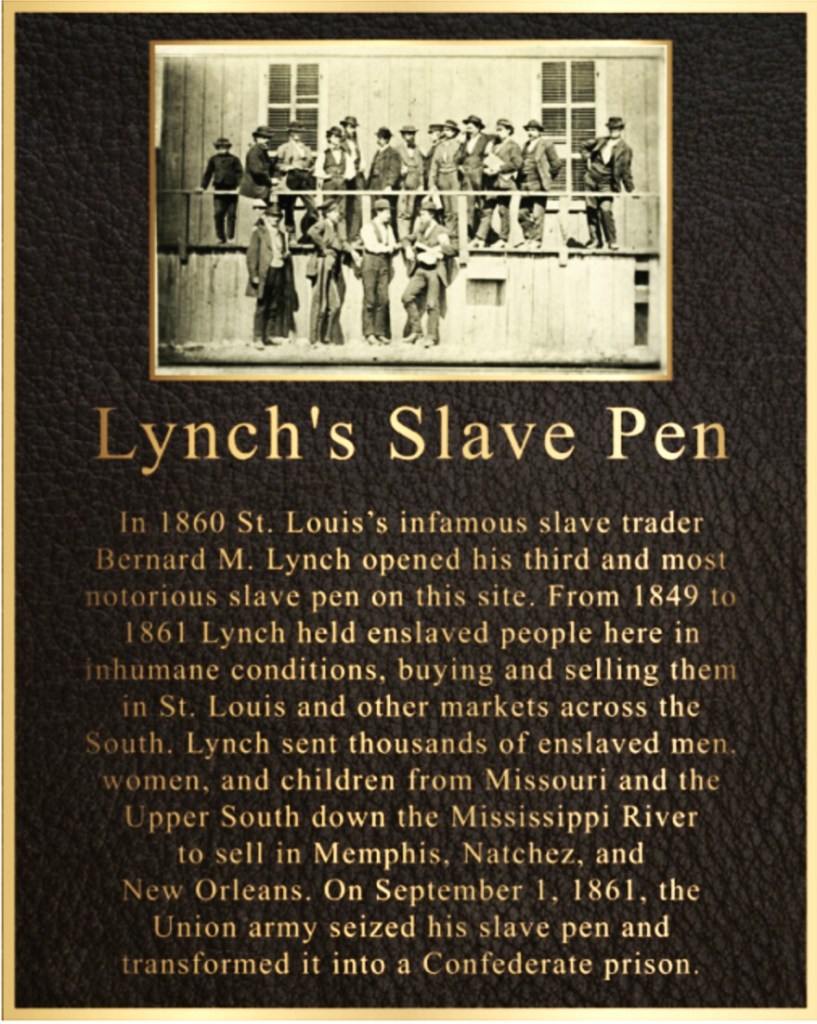
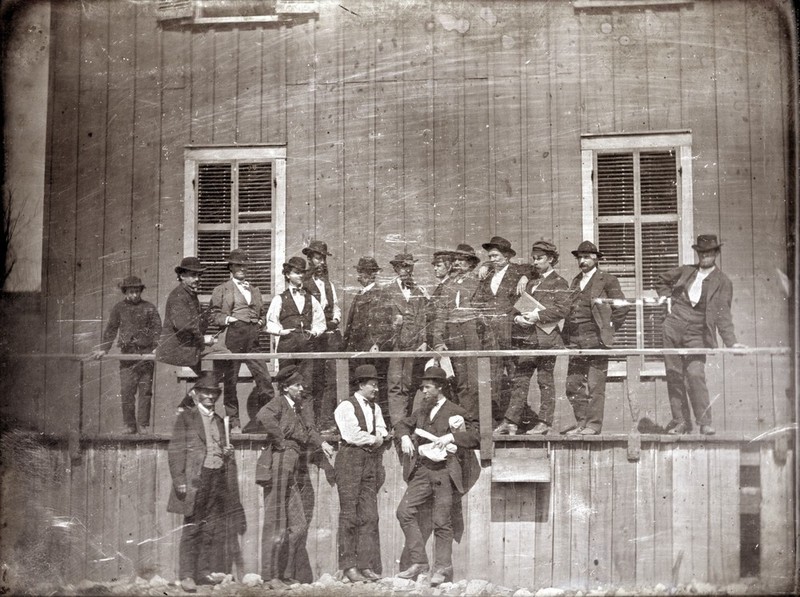
Dr. Kenneth Winn, Freedom Suits Memorial Foundation board member and former Missouri State Archivist, led the way in providing the accurate historical foundation for this effort. If he is not the most knowledgeable about Lynch’s terrible enterprise, he is at least among the top few historians who are. Gunby and Aldridge entrusted Dr. Winn to draft the language of the memorial bronze plaque, which also bears a reproduction of an 1850’s daguerreotype of the exterior of a Lynch slave trading location.
The plaque reads: “In 1860 St. Louis infamous slave trader Bernard M. Lynch opened his third and most notorious slave pen on this site. From 1849 to 1861 Lynch held enslaved people here in inhumane conditions, buying and selling them in St. Louis and other markets across the South. Lynch sent thousands of enslaved men, women, and children from Missouri and the Upper South down the Mississippi river to sell in Memphis, Natchez, and New Orleans. On September 1, 1861, the Union army seized his slave pen and transformed it into a Confederate prison.”

One of the more difficult aspects of this history lesson is that we cannot pretend that Lynch was acting alone. The fact that he had a very successful business in human trafficking inherently means there was a community of buyers and sellers of those human beings. (Nor was Lynch, the only slave trader in St. Louis).
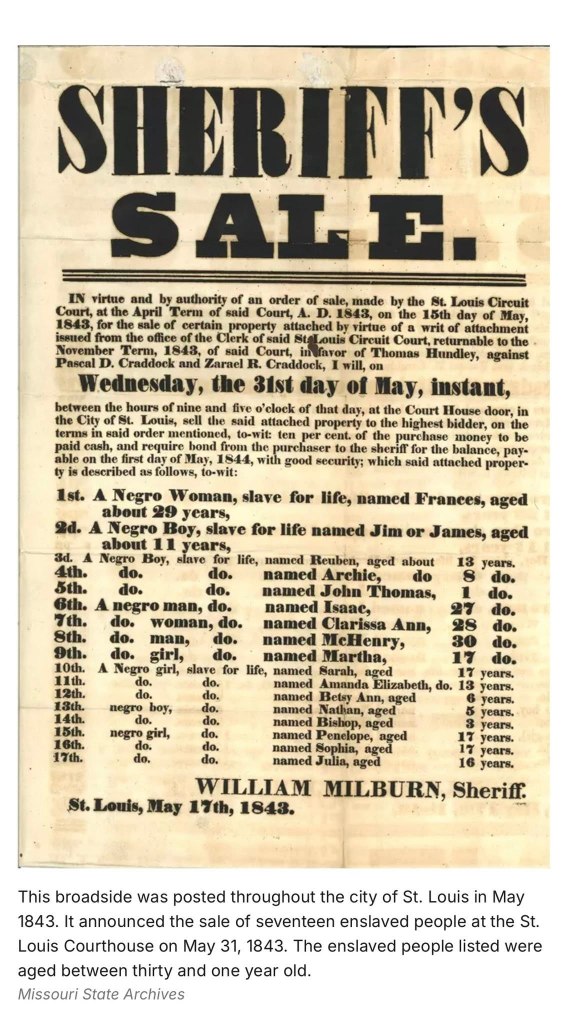
History shows Lynch served in three roles in depriving the enslaved of their freedom: jailer; trader; and, catcher. In these roles, he interacted with freedom seekers on the Underground Railroad and those filing freedom suits in St. Louis. For example, in 1855 Henry Shaw hired Lynch to capture Esther, who Underground Railroad icon Mary Meacham tried to help escape north of the city. Esther and her group were caught and Shaw directed Lynch to sell her. (“sold down the river”). Lynch’s dirty business also intersected with the St. Louis freedom suits in that, as Dr. Kenneth Winn tells us, Lynch would be paid to house freedom suits plaintiffs when the St. Louis County jail was already filled.
Our entire Foundation board hopes you will take a few minutes when you are next downtown to visit this bronze marker which honors the thousands of men, women, and children who suffered so much at the hands of Bernard Lynch and other human traffickers. You could combine it with a visit to the Old Courthouse and Freedom Plaza, home of the Freedom Suits Memorial. All three of these are within a few blocks of one another.
Our Foundation is dedicating all its efforts in 2026 in honor of Dr. Carter G. Woodson, who, among so many other significant accomplishments, created “Negro History Week” 100 years ago in February 2026. That became Black History Month, officially recognized in 1976-50 years ago.
Paul Venker
PresidentFreedom Suits Memorial Foundation
“We Must Remember. For Them. For Us.”
Additional reading:
https://www.journalofthecivilwarera.org/2022/03/the-remarkable-story-of-mattie-j-jackson/lynchs-slave-pen/
https://www.stlouis-mo.gov/government/departments/mayor/news/on-the-map-lynchs-slave-pens.cfm
 FREEDOM SUITS MEMORIAL FOUNDATION