

The underlying purpose of this Foundation is as stated on our homepage: “Committed to sharing the stories of the St. Louis freedom suits and the long Black freedom struggle in the United States.”
We invite and welcome all who share in this moment, realizing their vested interest(s) in these unprecedented times, to raise your voices using the hashtags #HandsOff and #HandsOffBlackHistory in as many social media expressions available.
These hashtags: #HandsOffBlackHistory and #HandsOff coupled with our own hashtag #WeMustRemember, when applied, will amplify the message with the deliberate intent of positively impacting the awareness and consciousness of society. The optimum result to be realized, is the adoption of an openness to understanding the benefits of broad education, inclusion and a high regard for the well-being of and quality of life for all people.
The “Hands Off” protests, a nationwide movement, are primarily directed against actions targeting government downsizing, the economy, immigration, and human rights, encompassing a range of issues and targeting policies that the protests perceive as detrimental to working people and marginalized communities.
Fortunately for St. Louisans, the celebration of the grand “reopening” of the Old Court House, located in downtown St. Louis, provides the perfect backdrop for this awareness-raising event.
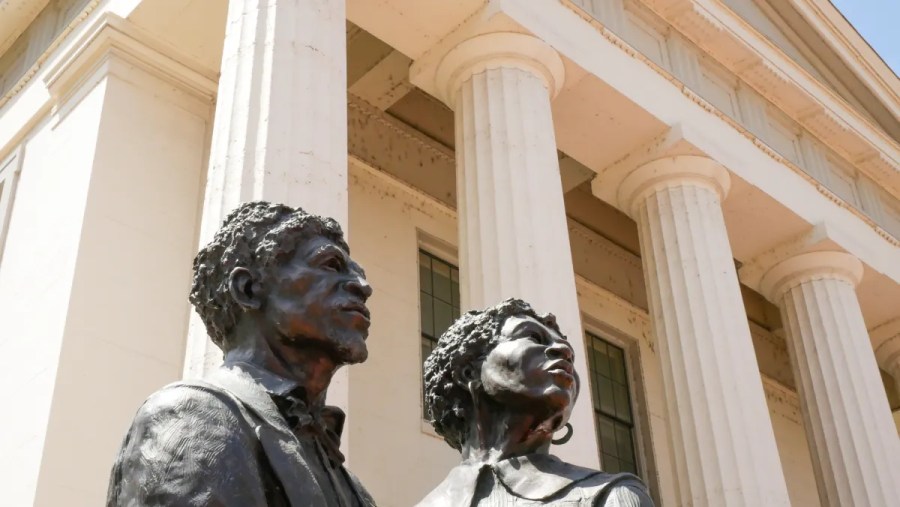
The statue of Dred Scott and his wife Harriet. Credit: Courtesy photo Source: St. Louis American Newspaper
After years of restoration, the Old Courthouse — home to landmark civil rights cases like Dred Scott v. Sandford and Virginia Minor’s fight for women’s suffrage — officially reopens to the public this Saturday, May 3 at 10 a.m. The reopening marks a powerful new chapter for one of America’s most historic buildings.
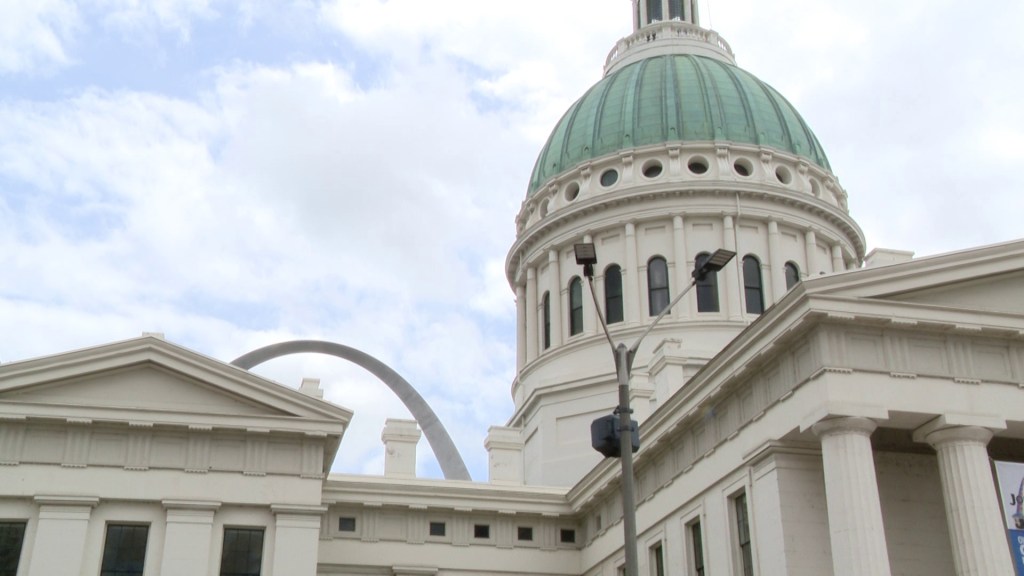
The Old Courthouse in Downtown St. Louis Photo Source: Channel 5
Specifics of the “Hands Off Black History” Movement:
- Affirming Black History: Some aspects of the movement, particularly in response to potential attacks on historical narratives, have emphasized the importance of protecting Black history in museums, libraries, and educational institutions.
- Defending Civil Rights: The movement connects the protection of Black history with broader civil rights issues, arguing that the accurate representation of history is crucial for defending the rights and voices of Black people.
- Freedom to Learn: Some organizations have framed the defense of Black history as a matter of “freedom to learn,” emphasizing the importance of access to education and the accurate portrayal of history.
To learn more about #HandsOff and #HandsOffBlackHistory, click on the links listed:
https://www.stlamerican.com/news/local-news/hands-off-st-louis-missouri-protesters-undeterred/
https://www.mobilize.us/handsoff/event/767201/
https://www.hrw.org/news/2025/04/10/trump-administrations-assaults-black-history
 FREEDOM SUITS MEMORIAL FOUNDATION